New York in August is a specific kind of hot. The pavement holds heat overnight, the subway platforms are worse than the street, and an apartment that felt bright and cheerful in April turns into something you actively manage. Staying comfortable is mostly about understanding where the heat comes from and cutting it off before it arrives.
Why Some Apartments Run Hotter
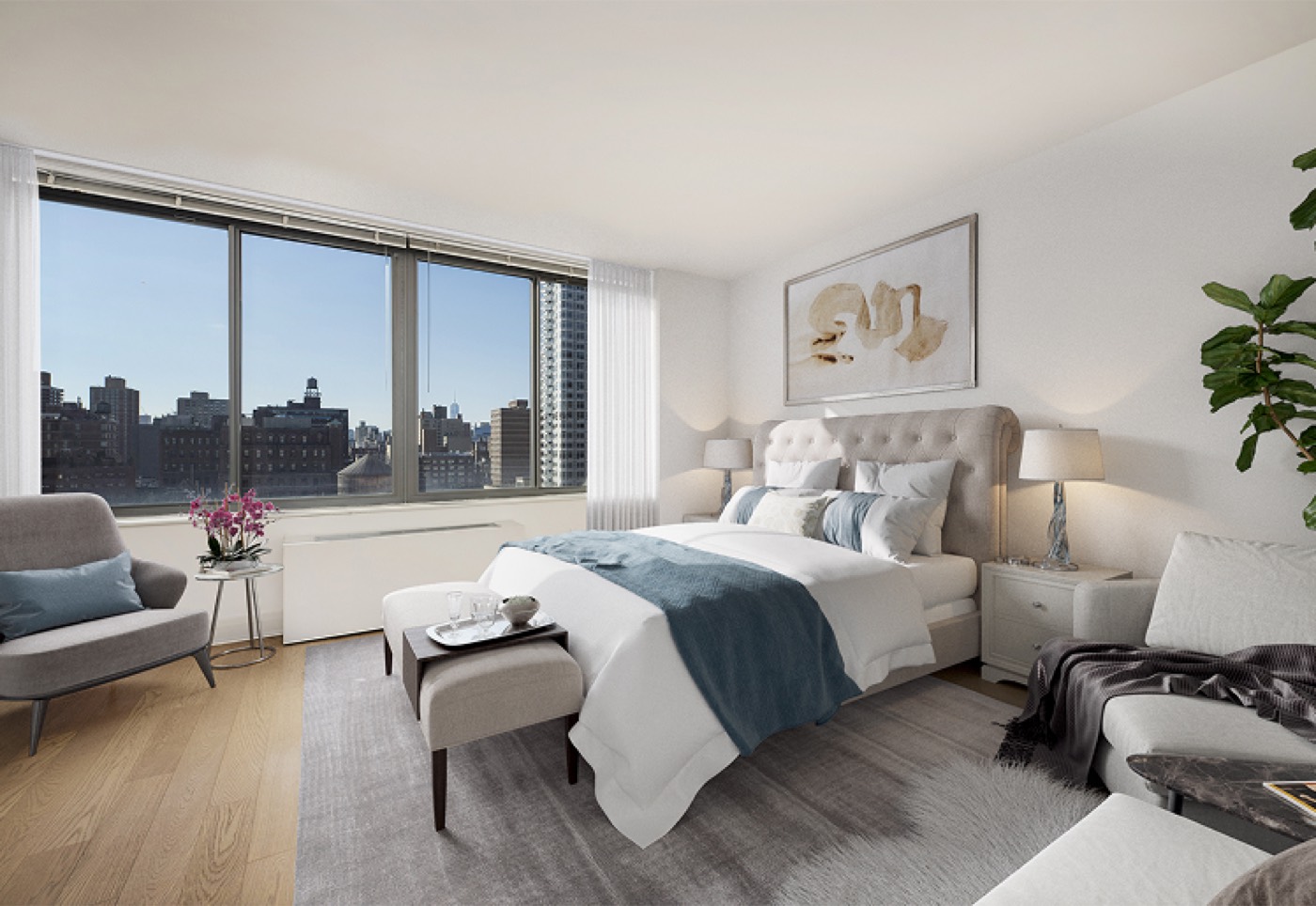
Two factors do most of the work: exposure and elevation. South and west-facing apartments take direct sun through the hottest part of the day, and west exposures get it in the late afternoon when the building and the street have already been heating for hours. Large windows amplify this — the same glass that makes a room feel open in winter is a heat collector in July.
Height compounds it. Heat rises through a building, so upper floors frequently run several degrees warmer than lower ones in the same line. A high-floor west-facing apartment with a wall of windows is the most beautiful version of this problem and the one that needs the most planning.
Block Heat Before It Gets In
Once sunlight passes the glass, it becomes heat inside your apartment and your air conditioner has to remove it. Stopping it at the window is dramatically more efficient than cooling it afterward.
Blackout or thermal-lined curtains are the highest-value purchase here, and the timing matters more than the product. Close them before the sun reaches that side of the building, not after the room is already warm. For a west-facing apartment that means late morning, not five in the afternoon. Cellular or honeycomb shades work on the same principle by trapping a layer of air against the glass.
It feels counterintuitive to darken an apartment you rented for its light, but it's a few hours a day, and the room stays usable.
Running AC Without a Punishing Bill
Air conditioning is the largest single driver of a summer electric bill, and in most New York apartments electricity is billed separately from rent. A few habits make a real difference.
Set a temperature you can live with and leave it there rather than dropping the thermostat to 62 to cool a room faster — it doesn't cool faster, it just runs longer. Clean or replace filters, since a clogged filter makes the unit work harder for less. Close doors to rooms you aren't using so you're not cooling storage space. And use a fan alongside the AC: moving air makes a room feel several degrees cooler, letting you hold a higher setting for the same comfort.
Con Edison publishes rate information and usage tools on its site, which is worth a look if your first summer bill catches you off guard.
Airflow in a One-Window Room
Cross-ventilation needs two openings, and plenty of New York apartments have windows on one wall only. You can still create movement: point a fan out the window rather than in, which pushes hot air out and pulls cooler air from the rest of the apartment behind it. Run it in the evening once the outside air has dropped below the indoor temperature, usually well after sunset in a city that stores heat all day.
Humidity is the other half of comfort. Damp air feels hotter and sleeps worse. Running the AC on a lower fan speed removes more moisture, and a small dehumidifier can make a room feel cooler without touching the temperature.
If you're apartment hunting, tour in the afternoon and ask about exposure and floor. Every listing at The Anthem notes its exposure — browse available residences or schedule a tour at (212) 684-3222.
Interested in Living at The Anthem?
Browse available studios, 1-, 2-, and 3-bedroom residences at 222 East 34th Street, Murray Hill — with video tours and 3D walkthroughs for every unit.
View Available Apartments Schedule a Tour