Listings state exposure almost in passing — north, south, east, west — as though it were a technical detail like the floor number. It isn't. Exposure determines what time your apartment is bright, how warm it gets in August, whether your plants live, and what your living room feels like at 4 p.m. in January. It's one of the few apartment features you genuinely cannot change.
What Each Direction Actually Delivers
South is the most consistently bright, with sun across the middle of the day year-round. It's the exposure most people mean when they say an apartment "has great light." The trade is heat gain in summer.
North gives soft, even, indirect light that barely shifts through the day. Photographers and painters have preferred north light for centuries because it's steady and doesn't blow out. It's cooler in summer and never dramatic. If you want an apartment that reads calm and consistent, north is underrated.
East gets direct morning sun and then goes indirect after midday. Wonderful if you're up early; less useful if you leave at eight and come home at seven, when the apartment has been indirect for hours.
West is the reverse: quieter mornings, then strong afternoon and evening light. It's the exposure that gives you sunsets and the one that holds the most heat late in the day, which matters most in summer.
Light and Working From Home
If you spend weekdays at a desk in the apartment, exposure stops being aesthetic and becomes practical. East light is beautiful at 8 a.m. and gone by the time most meetings start. West light arrives exactly when afternoon video calls do, and direct sun behind or beside a screen creates glare that no amount of monitor adjustment fixes.
North exposure is often the quiet winner for remote work: consistent light, no glare cycle, no need to close blinds at a predictable hour every afternoon.
Heat, Cooling Costs, and Comfort
South and west exposures collect real heat in summer, especially on higher floors and especially through large windows. That shows up as an air conditioner running longer and a Con Edison bill that reflects it.
None of that makes a west-facing apartment a bad apartment — the evening light is genuinely lovely. It just means treating window coverings as functional rather than decorative. Blackout or thermal-lined curtains and closing them before the sun hits, rather than after the room is already warm, makes a measurable difference.
Corner Units and Dual Exposure
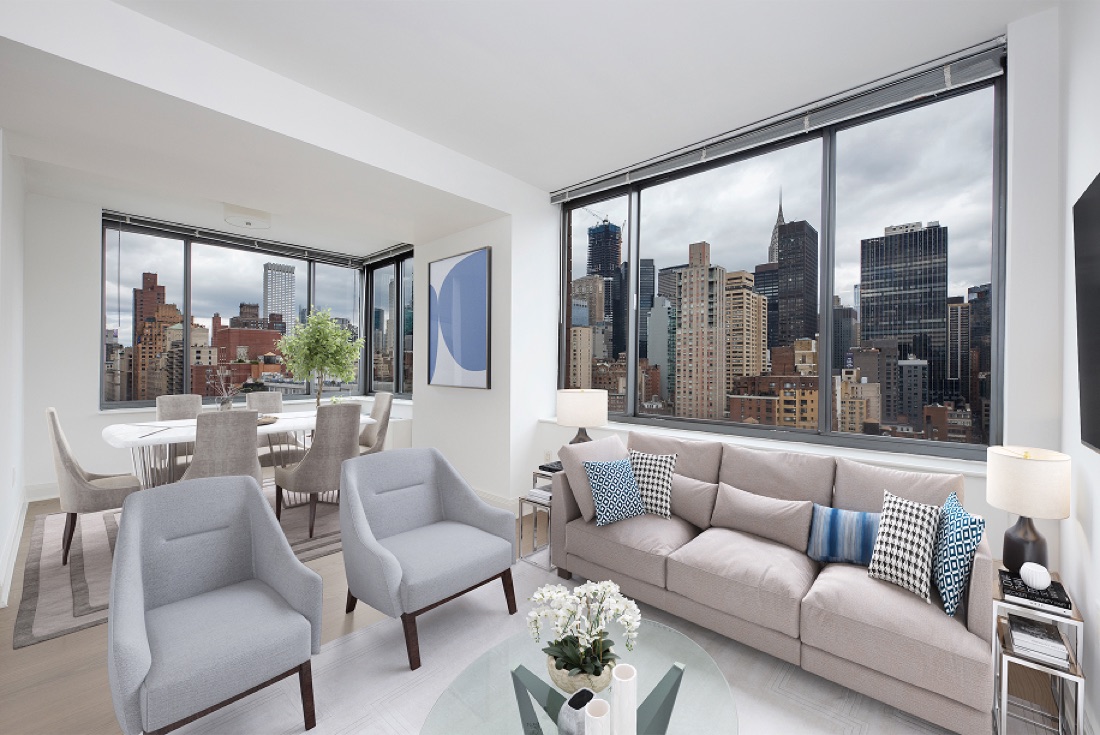
Corner apartments with windows on two walls change the equation. Two exposures mean light from more than one direction across more of the day, the possibility of real cross-ventilation, and a room that feels larger than its square footage because the light isn't coming from a single flat plane. Corner units typically carry a premium, and for anyone who spends significant time at home, it's often the premium that delivers most.
Check It Before You Sign
Tour at the hour you're most often home, not whenever an appointment is available. Open the blinds fully and look at what the window actually faces — sky, a courtyard, or a neighboring wall thirty feet away. Direction on a listing tells you where the window points; only standing there tells you what reaches it.
Every listing at The Anthem notes its exposure, so you can shortlist before you visit. Browse available residences or schedule a tour with our leasing team at (212) 684-3222.
Interested in Living at The Anthem?
Browse available studios, 1-, 2-, and 3-bedroom residences at 222 East 34th Street, Murray Hill — with video tours and 3D walkthroughs for every unit.
View Available Apartments Schedule a Tour