Two apartments, identical layouts, same line in the same building, ten floors apart — and different rents. The view explains part of that gap, but only part. Elevation changes how an apartment sounds, how it heats and cools, and how it fits into your day in ways that don't photograph.
Light, Views, and the Street
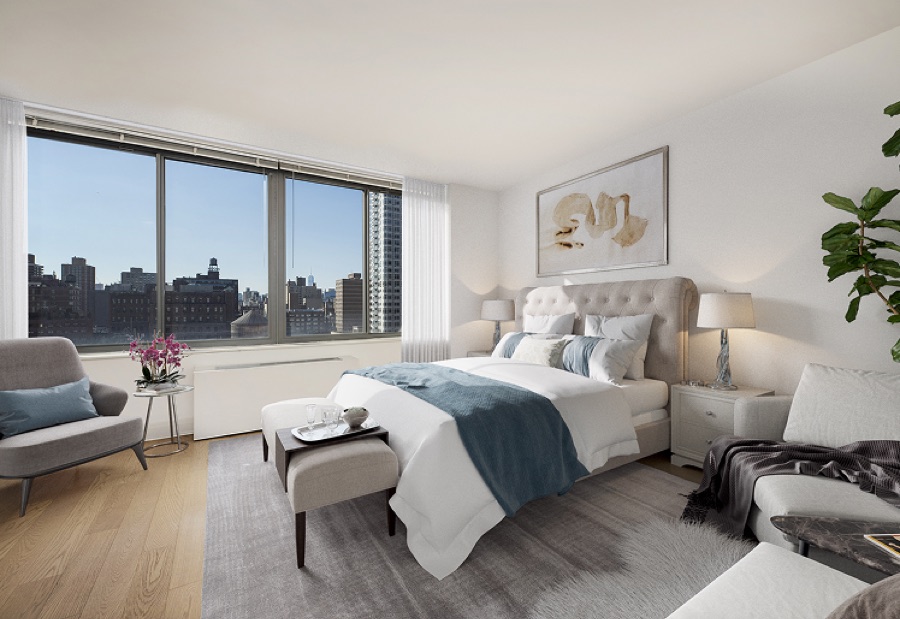
The obvious advantage of height is what you see and how much light reaches you. Above the surrounding rooflines, an apartment stops borrowing light from a light well and starts getting it directly, often for more hours of the day. In a dense grid like Midtown East, the floor where a line clears its neighbors is frequently where the price steps up.
Sound follows the same curve in reverse. Street noise — traffic, sirens, sanitation trucks, conversation at closing time — falls off meaningfully with elevation. It doesn't vanish; sirens carry remarkably far upward. But the constant background hum of an avenue reads very differently on the twentieth floor than the fourth.
Low floors get their own compensations. They tend to price lower for the same layout, they connect you to the street in a way high floors don't, and if the elevator is out you're walking a flight or two rather than fifteen.
Heat, Wind, and Temperature
Heat rises, and in a tall building it keeps rising. Upper floors frequently run warmer than lower ones, which is pleasant in February and worth planning for in July. Pair a high floor with a west or south exposure and you have an apartment that will need real cooling in summer — a factor in comfort and in what you pay Con Edison.
Wind is the other altitude effect people don't anticipate. Higher floors catch more of it, which can mean a genuinely pleasant cross-breeze with the windows open, and can also mean audible wind against the glass during a storm.
The Elevator Math
Every trip in and out of a high floor includes an elevator ride, plus waiting. Individually that's trivial; multiplied by a dog, a stroller, groceries, or a few trips a day, it becomes part of your routine. Some people never notice. Others find that a lower floor with stair access changes their relationship with leaving the apartment.
It's worth asking how many elevators serve the building and whether one is designated for service, because that affects wait times more than floor number does.
How to Compare Stacked Units
When the same layout is available on two floors, you're making a clean trade with a visible price attached. Tour both if you can. Stand at the windows and look at the actual sightline rather than the direction — a north-facing window on a low floor may look at a wall, while the same line higher up looks at sky.
Open a window and listen. Notice the temperature relative to the hallway. Ask what the price difference buys and decide whether the view is something you'll genuinely use every day or something you'll stop seeing after a month. Both answers are legitimate; they just point to different apartments.
At The Anthem, many layouts repeat across floors, which makes this comparison straightforward. Browse available residences to see which lines have units at different elevations, or schedule a tour with our leasing team at (212) 684-3222.
Interested in Living at The Anthem?
Browse available studios, 1-, 2-, and 3-bedroom residences at 222 East 34th Street, Murray Hill — with video tours and 3D walkthroughs for every unit.
View Available Apartments Schedule a Tour